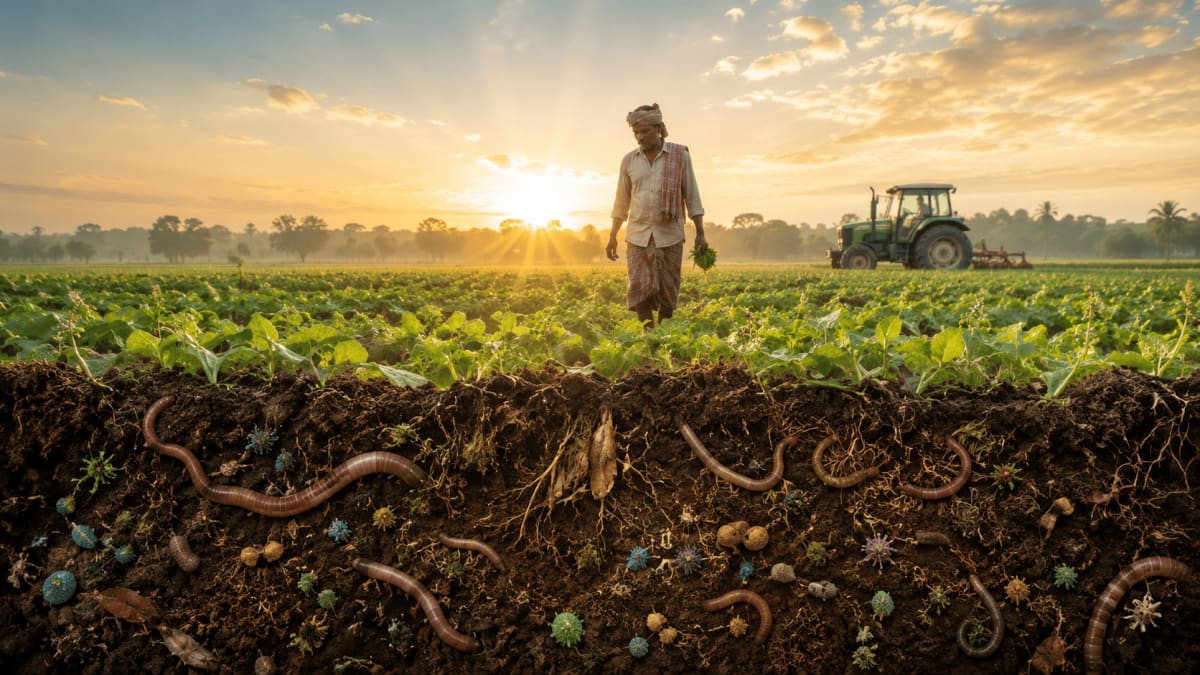
Regenerative soil management represents a shift from simply maintaining soil to actively improving it. By focusing on soil health, biodiversity, and natural nutrient cycles, regenerative practices help create more resilient farming systems capable of supporting future generations.
Why Soil Health Matters
Soil is far more than a growing medium. It is a living ecosystem filled with microorganisms, organic matter, nutrients, and beneficial organisms that support plant growth. Healthy soil improves water retention, reduces erosion, enhances nutrient availability, and contributes to stronger crop performance.
When soil health declines, farmers often face reduced productivity, increased input costs, and greater vulnerability to environmental stress. Protecting and restoring soil health is therefore essential for sustainable agricultural success.
Key Principles of Regenerative Soil Management
Regenerative agriculture encourages farming practices that work with nature rather than against it. Common approaches include:
- Increasing organic matter through compost and natural amendments
- Reducing unnecessary soil disturbance
- Maintaining continuous ground cover
- Promoting crop diversity and rotation
- Supporting beneficial soil microorganisms
- Improving water management and conservation
These practices help build stronger soil structure, improve nutrient cycling, and enhance long-term farm productivity.
The Role of Nutrition in Sustainable Agriculture
While regenerative practices focus heavily on soil health, animal nutrition also plays an important role in creating sustainable agricultural systems. Livestock contribute to nutrient cycling through manure management and integrated farming systems that support healthier soils.
At Livanta Agro Feed Industries Limited, we believe sustainable agriculture begins with balanced nutrition and responsible farming practices. Quality feed solutions help support healthier livestock, improved farm productivity, and stronger agricultural ecosystems.
Building Resilience for the Future
Climate variability, population growth, and increasing resource pressures require agriculture to become more efficient and resilient. Regenerative soil management offers a practical pathway toward achieving these goals while preserving the natural resources upon which farming depends.
By improving soil health today, farmers can build more productive, sustainable, and profitable operations for tomorrow.
Looking Ahead
The future of agriculture will depend on our ability to balance productivity with environmental stewardship. Regenerative soil management provides an opportunity to strengthen both. Through innovation, responsible practices, and a commitment to long-term sustainability, farmers can help create a healthier future for their land, their communities, and future generations.
At Livanta, we believe that sustainable growth begins from the ground up. Healthy soil, healthy livestock, and informed farming practices together form the foundation of a stronger agricultural future.